NFC and QR Codes in Business Displays: Which Should Your Company Use?

Introduction
Businesses increasingly use countertop signage and displays to help customers find information quickly. A sign can direct someone to a menu, product page, service list, contact profile, booking form, or feedback page. Two common ways to connect a physical display to digital content are Near Field Communication (NFC) and QR codes.
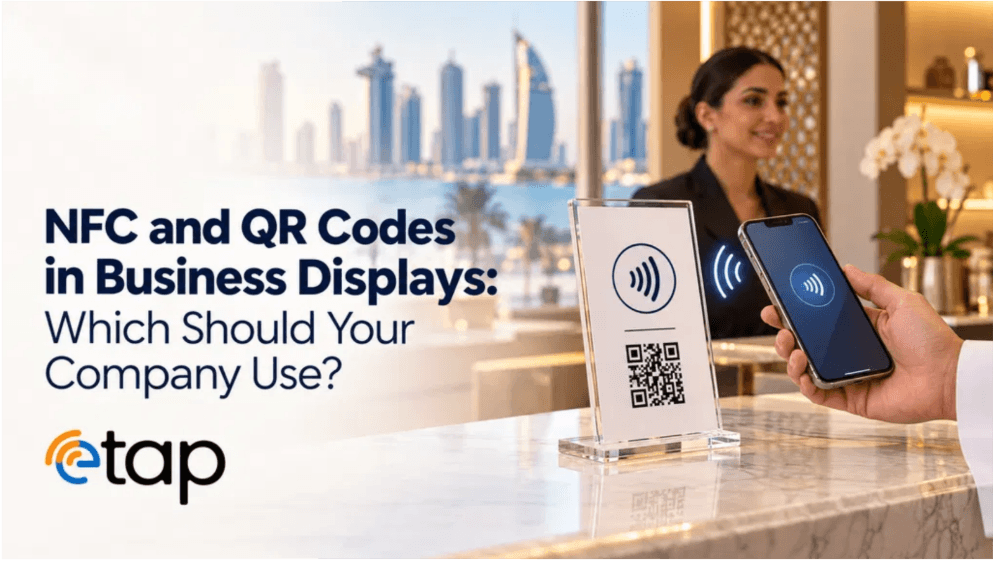
They serve a similar purpose but work differently. NFC uses short-range wireless communication, while a QR code is an optical pattern that a phone camera can scan. For businesses in Qatar, the choice does not always have to be one or the other. A custom display can include both and let customers choose how they want to connect.
How NFC Works on a Display
An NFC tag is a small chip and antenna that can store information such as a website link. When a compatible phone is brought close, it can read the information and open the linked destination. On a business display, the tag may be integrated into a sticker, card, or suitable stand.
NFC is convenient because customers do not need to aim a camera at a code. However, the phone must support NFC and the tag must be compatible and correctly programmed. Clear instructions such as “Tap your phone here” help customers understand the interaction. Test the finished display with relevant devices before placing it in a customer-facing area.
How QR Codes Work
A QR code stores information in a pattern of dark and light squares. A smartphone camera can scan the code and open a web link or other supported action. QR codes are familiar to many customers and do not require the phone to use NFC.
The code needs sufficient size and contrast, and it should be placed where customers can scan it comfortably. Avoid distorting the code or placing it on reflective surfaces that make scanning difficult. The destination should be mobile-friendly and match the sign’s promise. If the code is printed permanently, plan how to manage the destination if the campaign or website changes.
NFC vs QR: Key Differences
NFC is based on proximity and a tap, while QR depends on a camera scan. NFC can create a quick interaction when the tag location is obvious. QR codes are visible and can be used by phones without NFC support. Both can direct customers to the same page, and both require a working link and a useful destination.
Your choice should reflect the environment and audience. A small counter may suit a tap-enabled sticker, while a large poster may benefit from a QR code that can be scanned from a short distance. For accessibility and convenience, offering both methods can reduce friction. Neither technology automatically improves engagement; the quality and relevance of the linked content are equally important.
Where Combined Displays Are Useful
Restaurants can use combined NFC and QR displays for menus, promotions, reservations, or feedback. Retail stores can connect shoppers to product details or brand stories. Offices and service businesses can provide contact information, appointment links, and service descriptions. Hotels and event venues can help visitors access relevant information without searching for printed leaflets.
Keep the sign simple. One headline, a clear instruction, and the relevant tap symbol and QR code are usually enough. Make sure the display is stable, visible, and positioned near the point where the information is useful. Avoid placing it where it could be confused with a payment terminal or official security credential.
Testing and Maintaining Your Display
Before launch, test both NFC and QR interactions with multiple compatible phones. Confirm that the links are correct, pages load quickly, and the experience works on mobile screens. Check the QR code after the final artwork is printed; a code that works on a computer screen may not scan well when reduced in size or printed with low contrast.
Review the display regularly for damage, outdated offers, and broken links. If analytics are available, use them to understand engagement without collecting more personal information than necessary. Make changes when evidence suggests customers are struggling to complete the intended action.
Custom Business Displays from etap
The best format depends on where the display will be used and what customers need to do. A compact NFC sticker can suit a small surface, while an acrylic stand can make instructions and a QR code more visible at a counter or reception desk.
Explore etap acrylic stands, NFC stickers in Qatar, and the wider custom NFC solutions collection. Visit etap.qa to learn more about NFC and RFID products for business applications.
Conclusion
NFC and QR codes help businesses connect physical displays with useful digital experiences. NFC makes tapping possible, QR codes offer a camera-based alternative, and using both can give customers more choice. The most effective display clearly explains what to do, opens the right mobile-friendly page, and is maintained over time. With thoughtful design and testing, businesses in Qatar can make customer touchpoints more convenient and informative.