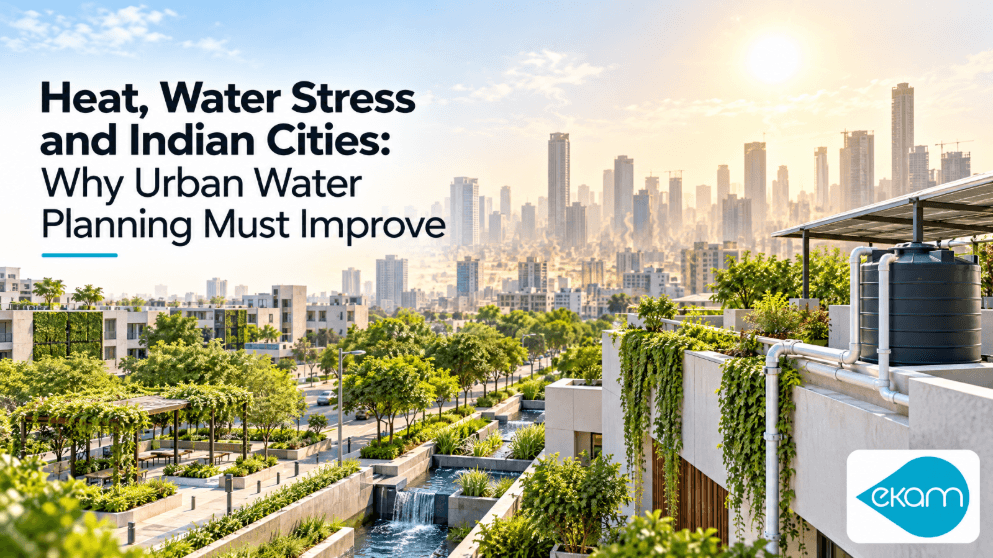
Heat, Water Stress and Indian Cities: Why Urban Water Planning Must Improve

Introduction
Periods of above-normal temperatures can affect how cities use and manage water. During hot weather, households may need more water for drinking, bathing and cleaning, while offices, hospitals, hotels and commercial sites may see increased demand for cooling and landscaping. At the same time, water sources can face seasonal pressure and distribution systems may struggle to meet peak demand. Urban resilience therefore requires planning for both heat and water: reducing unnecessary use, protecting supply infrastructure and making buildings more efficient.
How heat affects urban water demand
Hot conditions can increase personal water needs and evaporation from exposed storage, soil and water features. Parks and landscaped areas may require more irrigation, while some commercial facilities operate cooling equipment for longer periods. Demand does not rise equally in every city or building, so local meter data and weather records are more useful than assumptions. Facility teams should identify which activities drive peak use and distinguish essential demand from avoidable waste.
Why high temperatures are only part of the story
Urban water stress is shaped by several factors: rainfall variability, groundwater extraction, source reliability, leakage, population growth, storage capacity and the condition of distribution networks. A city can receive intense monsoon rain but still face dry-season shortages if rainwater is not captured, aquifers are not recharged appropriately or demand is poorly managed. Heat can intensify existing weaknesses, but it is rarely the sole cause of water scarcity.
Use data to prepare for hot periods
Buildings and municipalities can use past bills, daily meter readings, weather forecasts and maintenance records to identify high-demand periods. Before summer, inspect tanks, valves, pumps, cooling equipment and irrigation systems. Repair leaks and check that meters work. Large sites may benefit from submeters in high-use areas. A short seasonal action plan can assign responsibilities, set inspection dates and establish a process for responding to sudden increases in consumption.
Make buildings more water-efficient
Water efficiency often begins with routine maintenance. Repair running toilets and leaking taps, install appropriate flow-control devices, and select efficient equipment when replacing fixtures. Review cleaning methods and irrigation schedules. In suitable commercial restrooms, waterless urinals can reduce flushing-water demand, provided the system matches the site and is maintained correctly. These measures should be evaluated in context; actual savings depend on usage, equipment and operating practices.
Capture rainwater and protect recharge
Rainwater harvesting can help reduce runoff and supplement water availability when the design suits the site. Roofs, gutters and storage systems need regular cleaning, and the first flush of roof runoff may need to be diverted according to the system design. Groundwater recharge should be planned with local hydrogeology and applicable guidance in mind. Poorly designed systems can introduce contaminants or fail to provide meaningful recharge, so professional assessment matters.
Reuse wastewater safely
Treated wastewater can support certain non-potable uses, including landscaping or toilet flushing, where treatment quality and local rules permit. Reuse can reduce demand for freshwater, but it requires reliable treatment, testing, separate plumbing and clear labelling. Operators must ensure that treated water is appropriate for its intended use and that maintenance is funded. Buildings considering an on-site sewage treatment plant should assess daily flow, peak load, available space, power, sludge handling and the standards that apply.
Plan for vulnerable facilities
Hospitals, care facilities, schools and public buildings need continuity plans because water shortages can affect hygiene and essential services. Plans should identify critical uses, backup arrangements, water storage capacity, responsible staff and escalation procedures. Any emergency storage or alternate source must be managed safely to avoid contamination. Businesses should also communicate conservation measures clearly so that staff understand what is changing and which uses must remain protected.
Connect city action with individual action
Households, businesses, property managers and public authorities each influence urban water outcomes. Individuals can report leaks and avoid waste, while building owners can invest in metering and efficient fixtures. Municipal agencies can improve network maintenance, transparent reporting, stormwater management and long-term supply planning. The most effective programmes combine infrastructure investment with demand management and consistent public communication.
Conclusion
Heat-related water pressure is a reason to strengthen planning before a shortage occurs. Better measurement, leak repair, efficient fixtures, rainwater management and safe wastewater reuse can help cities and buildings use water more responsibly. For further reading, explore Ekam Eco Solutions’ article on 26 Indian Cities See Above-Normal Temperatures and its guide to Water Conservation & Management in India. Sustainable urban water management begins with practical decisions repeated consistently.
A practical implementation checklist
A useful next step is to assign an owner to each improvement and record the expected completion date. Document the current condition, the action taken and how the result will be checked. Where a change affects sanitation, wastewater, chemical handling or worker safety, consult the relevant technical guidance and applicable regulations before implementation. Pilot a change in one area, gather feedback from staff and users, and expand it only after confirming that it works as intended. This measured approach reduces guesswork, supports accountability and makes it easier to explain the value of the programme to management and stakeholders.