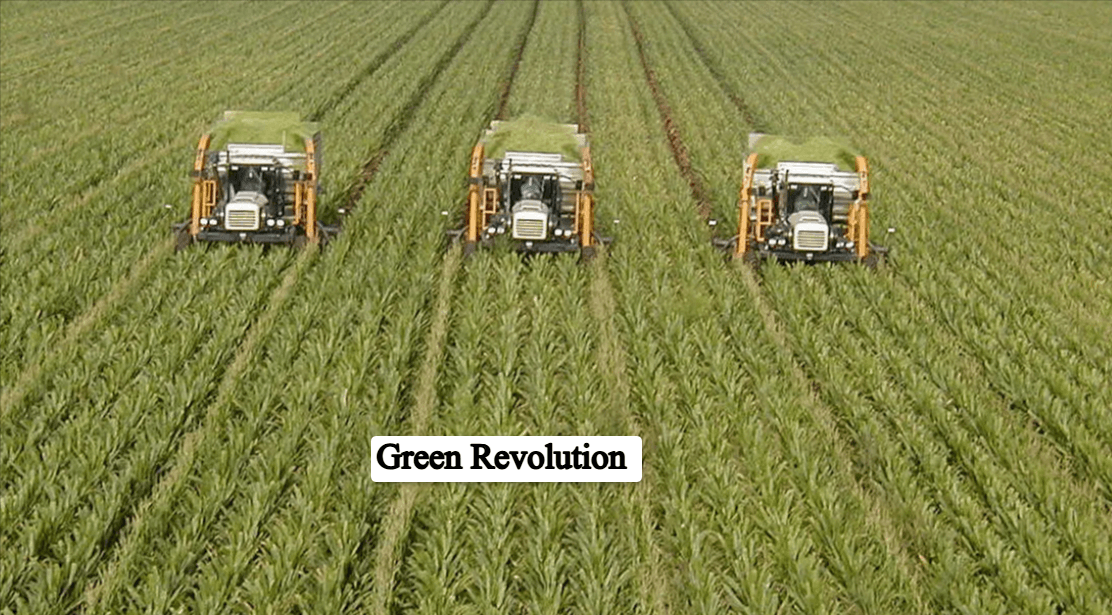
What is Green Revolution? Know its Advantages and Disadvantages

The Green Revolution refers to a period of profound transformation in the field of agriculture that began in the middle of the 20th century. It was characterized by the use of high yielding varieties of seeds and pesticides and chemical fertilizers as well as improved irrigation facilities and the use of modern agricultural techniques. The principal goal in the Green Revolution was to increase the production of food and decrease hunger, particularly in poor countries. In India and a number of other countries it played a significant contribution to ensuring food security. Although this Green Revolution brought remarkable benefits however, it also brought about a variety of social, economic, and environmental issues. It is therefore crucial to understand its benefits and drawbacks in depth.
Advantages of the Green Revolution
1. Increase in Food Production
The most significant benefit from the Green Revolution was the sharp increase in the production of agricultural products. The introduction of high yielding seeds from crops such as rice and wheat led to an exponential increase in production. Countries that were once facing shortages of food began to produce enough food to satisfy the growing needs of their population. In India the production of food grains has increased dramatically, which reduced dependency on imported food.
2. Achievement of Food Security
Prior to the Green Revolution, many countries had frequent famines as well as food crisis. The greater harvest of grains for the food industry was a way to provide food all through the year. This helped nations become more self-sufficient and boosted their ability to deal with populations and droughts.
3. Growth in Farmers’ Income
Farmers who embraced modern methods of farming have seen higher yields on their crops. More production means a greater available surplus for sale that helped farmers get better earnings. In the regions that were the areas where there was evidence that the Green Revolution was successful, the prosperity of rural areas improved significantly.
4. Development of Agriculture Infrastructure
The Green Revolution led to the improvement of irrigation infrastructure, rural roads storage facilities, as well as markets. The investments were made for dams, canals and tube wells, as well as electricity supply. These improvements helped strengthen the agriculture sector and facilitated the development of the rural economy in general.
5. Employment Generation
The increased productivity of agriculture has led to a greater demands for workers in tasks such as harvesting, sowing and irrigation, transportation and processing. This led to more job opportunities in rural areas and decreased the amount of seasonal unemployment.
6. Promotion of Scientific Farming
Traditional farming practices were replaced with modern methods. Farmers began to use improved seeds fertilisers, pesticides and fertilizers and modern equipment. Agriculture research institutions played an important part in disseminating knowledge and educating farmers in making farming more efficient and organized.
7. Boost to Agro-Based Industries
The growth in production of agricultural products led to the expansion of agro-based industry sectors like sugar mills, food processing textile mills, textile mills along with fertilizer factories. These industries created jobs and also contributed to economic growth.
8. Reduction in Poverty and Hunger
In the regions in which it was the Green Revolution succeeded, poverty levels decreased. Food availability increased, which helped decrease malnutrition and hunger. Food distribution systems in the government were more efficient because of excess production.
Disadvantages of the Green Revolution
1. Unequal Regional Development
The advantages that came from the Green Revolution were not evenly dispersed. It was most prosperous in regions with high irrigation infrastructure, like Punjab, Haryana, and western Uttar Pradesh. Backward and rain-fed regions were not as fortunate and exacerbated regional inequalities.
2. Rich Farmers Benefited More
Farmers with wealth and power benefitted much more benefits of the Green Revolution because they could purchase modern inputs, such as top-quality seeds, fertilizers, machines as well as irrigation system. Farmers who were marginal or small had less resources and were left further behind, causing a rise in economic inequality in rural areas.
3. Environmental Degradation
The excessive use of chemical fertilizers and pesticides caused soil erosion and affected the water bodies. As time passed, land productivity diminished because of soil erosion depletion of nutrients and the loss of salinity. The use of groundwater in excess for irrigation resulted in an abrupt decline in the water table.
4. Health Hazards
Pesticides used in large quantities and other chemicals had a negative impact on the human body’s health. Farmers and customers are exposed to dangerous chemicals that could cause health problems like skin diseases respiratory problems, skin diseases, and food contaminant.
5. Loss of Biodiversity
The Green Revolution focused mainly on certain crops such as rice and wheat. Traditional crops and mixed farming methods were not considered. This led to a decrease in biodiversity of agricultural crops which made crop varieties more prone to disease and pests.
6. Overdependence on Chemical Inputs
Modern agriculture became heavily dependent on chemicals for fertilizer, pesticides in addition to hybrid seeds. In time, farmers realized it difficult to sustain their productivity without increasing amount of inputs. This inflated the price of cultivation, and resulted in lower profits margins.
7. Mechanization and Unemployment
The utilization of harvesters, tractors and other machinery reduced the requirement of manual work in certain regions. This resulted in a decrease in the number of farmers, particularly in areas in which mechanization was a rapid process.
8. Increased Debt Among Farmers
The cost of fertilizers, seeds irrigation and machines led many farmers to take out loans. In the case of crop failures, bugs, weather or price declines often left farmers with financial debt. In some instances this could lead to extreme financial hardship.
9. Neglect of Other Crops
The increased focus on food grains led to a lack of the attention paid to other crops like oilseeds, pulses, and millets. This led to manufacturing of those plants decreased which led to nutritional imbalances and an increase in dependence on imports for specific food items.
10. Long-Term Sustainability Issues
Although there was evidence that Green Revolution increased production in the short-term but its long-term viability is being doubted. The degradation of soil, water scarcity and environmental damages are threatening the future of agricultural production.
Conclusion
The Green Revolution played a vital role in increasing the production of food and in ensuring food security particularly in the developing nations. In the same way it led to economic inequalities as well as serious environmental problems. The real value is taking lessons from its successes as well as its shortcomings.