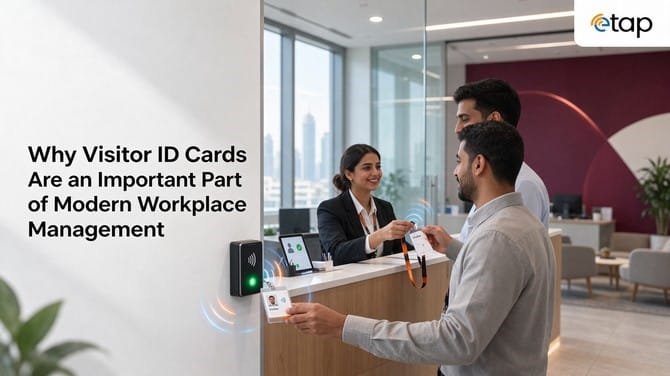
Why Visitor ID Cards Are an Important Part of Modern Workplace Management?

A welcoming reception area creates the first impression of an organisation. When customers, suppliers, contractors or interview candidates arrive, businesses need a practical way to identify visitors and help employees understand who is on the premises.
Visitor identification cards are a simple tool that can support this process. When used as part of a clear reception procedure, they help make visitor handling more organised and professional.
What Are Visitor ID Cards?
Visitor ID cards are temporary identification cards issued to people entering an office, facility or other business premises.
Unlike permanent employee ID cards, visitor cards are generally intended for short-term use. They may display information such as:
- Visitor name
- Company or organisation
- Date of visit
- Person or department being visited
- Visitor category
- Temporary identification number
The exact information depends on the organisation’s privacy requirements and internal procedures.
Why Do Businesses Use Visitor ID Cards?
- Easier Visual Identification
A clearly displayed visitor card helps staff distinguish visitors from employees. This can be particularly useful in offices, commercial buildings and facilities that receive frequent external guests.
- A More Organised Reception Process
Issuing a visitor card can become part of a consistent check-in procedure. Reception staff can follow the same steps for recording visits, providing identification and collecting temporary cards when visitors leave.
- A Professional First Impression
A properly designed visitor card communicates that an organisation has considered the visitor experience. Consistent colours, readable text and suitable branding can make temporary identification look more professional.
- Support for Internal Procedures
Visitor cards can complement other workplace processes, such as appointment confirmation, host notification and visitor sign-in records. They should be used alongside appropriate supervision and security procedures rather than as a replacement for them.
What Should a Visitor Card Include?
A good visitor ID card should be easy to read at a glance. Businesses may consider including:
- A clear visitor label
- Company logo
- Visitor name or temporary ID
- Date or validity period
- Colour coding for different visitor categories, if useful
Avoid placing unnecessary personal information on a card that will be visible to others. Organisations should follow their own privacy and data-handling policies.
Choosing the Right Card Design
The design should suit the workplace environment and the way visitor cards will be issued, displayed and collected.
Consider card material, print clarity, durability, layout and whether the cards are intended for single-use or repeated use. If a card needs to work with an access-control or identification system, compatibility requirements should be checked separately.
A standard printed visitor ID card does not automatically provide electronic access functionality. Any RFID or other electronic feature requires compatible hardware and system configuration.
Where Are Visitor ID Cards Useful?
Visitor identification cards can be used in:
- Corporate offices
- Educational institutions
- Commercial buildings
- Warehouses and industrial facilities
- Event venues
- Clinics and other service environments
The process can be adapted to suit the number of visitors, the nature of the premises and the organisation’s internal policies.
Businesses looking for customised visitor identification products in Qatar can explore ETAP’s Visitor ID Card Printing solution.
Conclusion
Visitor ID cards are a straightforward way to support workplace identification and reception procedures. When combined with a consistent check-in process, clear design and sensible privacy practices, they can contribute to a more organised and professional visitor experience.